
Train Like Qatar: Indoor Training Culture, Heat Science and the Wellness Revolution of the Arabian Gulf
Qatar arrives at the 2026 FIFA World Cup as a nation whose relationship with sport has been transformed more dramatically and more rapidly than almost any other in the world. The host of the 2022 World Cup, Qatar used that tournament as a catalyst for a broader sporting and wellness revolution that has reshaped how its citizens engage with physical activity, from the air-conditioned indoor training facilities that manage the Gulf's extreme climate to the world-class sports science infrastructure built to develop the national football programme. The Maroon carries into 2026 a fitness culture that is simultaneously rooted in ancient Bedouin physical tradition and at the cutting edge of modern performance science. The lessons for training in any environment are as practical as they are fascinating.
Training in Extreme Heat: Qatar's Climate as a Physiological Challenge
Qatar's climate presents one of the most extreme heat and humidity combinations on earth. Summer temperatures regularly exceed 45 degrees Celsius with relative humidity above 70 percent, creating wet-bulb temperature conditions that exercise physiologists classify as potentially dangerous for sustained outdoor physical effort. Qatar's response to this climate challenge has driven innovation in sports science that is now applied in elite athletic programmes worldwide.
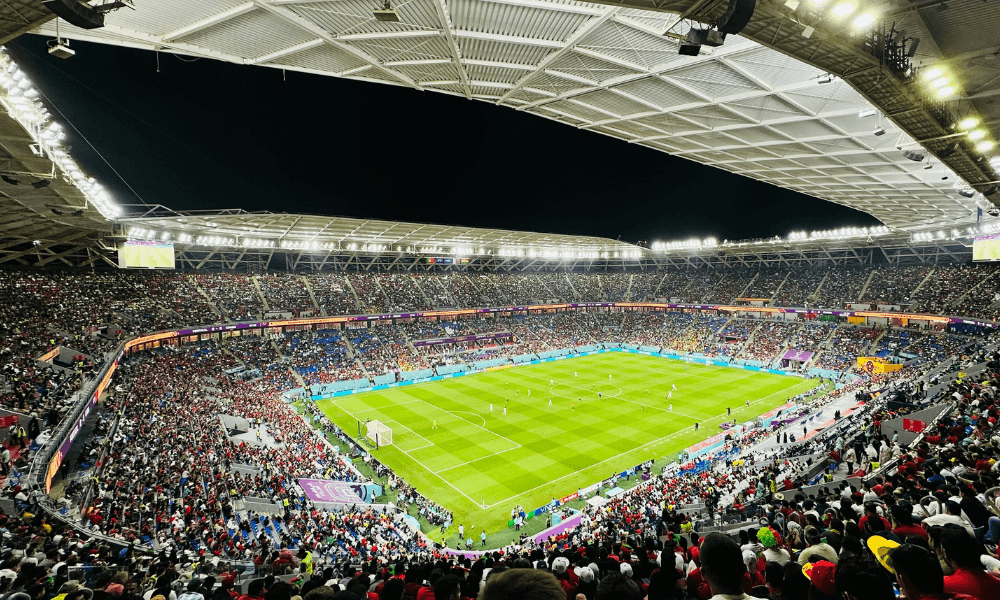
The cooling technologies developed for Qatar's 2022 World Cup stadiums, which maintained pitch-level temperatures below 20 degrees Celsius in ambient conditions of 40 degrees, represent a remarkable engineering achievement with direct sports science implications. Research on the effect of environmental temperature on athletic performance found that for every degree Celsius above 20 degrees ambient temperature, endurance performance declines by approximately 1.6 percent, making the management of thermal environment one of the most impactful performance variables available to elite sports organisations.
For everyday exercisers in hot climates, Qatar's experience validates the principle that managing training environment temperature is a legitimate performance strategy rather than mere comfort preference. Training in appropriately cooled environments for quality sessions and deliberately heat-exposing the body in controlled conditions for adaptation purposes represents the optimal approach to hot-climate athletic development.

Aspire Academy: Qatar's World-Class Athletic Development Model
Aspire Academy in Doha is one of the world's most comprehensively equipped sports science and athlete development facilities. Established in 2004, Aspire has invested in biomechanical analysis, physiological testing, nutrition science, psychological preparation and recovery technology at a level that rivals the best Olympic training centres in the world. Its influence on Qatari football development, while gradual, has produced a generation of technically and physically superior players compared to previous generations.
Research on the impact of world-class sports science infrastructure on national team performance found that nations with high-quality centralised development academies demonstrated significantly better improvement trajectories in international football rankings over 10-year periods compared to nations without equivalent infrastructure investment. Qatar's investment in Aspire represents a long-term athletic development strategy whose full returns are only beginning to be realised.

Indoor Fitness Culture: The Science of Climate-Controlled Training
Qatar's extreme outdoor climate has produced one of the world's most sophisticated indoor fitness cultures. Air-conditioned gyms, climate-controlled training facilities and covered running tracks are standard features of Qatari urban infrastructure, and the population's relationship with indoor exercise reflects the practical necessity of managing activity in conditions that make sustained outdoor training physiologically unsafe for much of the year.
Research on indoor versus outdoor training environments consistently finds that indoor training produces equivalent physiological adaptations to outdoor training when intensity and volume are matched, while offering advantages in terms of controllability, safety and consistency. The ability to train at predetermined intensities without the confounding variables of heat, humidity and terrain produces highly consistent training stimuli that facilitate the kind of precise progressive overload that optimal adaptation requires. Qatar's indoor training culture, born of necessity, represents a sophisticated approach to training environment management.

Bedouin Physical Heritage: Strength Through Desert Survival
Qatar's indigenous Bedouin heritage includes physical traditions rooted in the extraordinary demands of nomadic desert survival: camel riding, falconry, long-distance desert navigation on foot and the physical labour of traditional maritime pearl diving that sustained Qatar's economy before the discovery of oil. Pearl diving in particular demanded exceptional breath-holding capacity, cardiovascular fitness and upper body strength from Qatar's coastal populations for generations.
Breath-hold diving, or apnea training, is now recognised by exercise science as a genuinely effective training modality with unique physiological benefits. Research on competitive free divers found that regular apnea training significantly improved cardiovascular efficiency, increased hypoxic tolerance and produced measurable improvements in aerobic performance through adaptations including improved oxygen utilisation efficiency and enhanced haematological response to low-oxygen conditions. Qatar's pearl diving heritage was, in physiological terms, running a sophisticated hypoxic training programme for centuries.
Luxury Wellness: Recovery as an Art Form in Qatar
Qatar's status as one of the world's wealthiest nations has produced a luxury wellness culture of considerable sophistication, with world-class spa facilities, cryotherapy centres, float therapy pools and recovery technology available across Doha's premium hotel and fitness infrastructure. While access to this level of recovery technology is limited to a small proportion of the global fitness community, the principles these technologies apply are accessible to everyone.
Cryotherapy, float therapy and advanced massage protocols all operate on physiological principles, reducing inflammation, promoting parasympathetic nervous system activation and facilitating tissue repair, that can be approximated through cold showers, deliberate rest and self-massage techniques available to any exerciser regardless of budget. Qatar's luxury wellness culture applies these principles at the highest possible specification. The principles themselves are universal.
What to Wear for Qatari-Inspired Training
Climate-controlled indoor training, high-intensity gym conditioning and the precision-based approach of world-class sports science methodology all demand activewear that delivers consistent performance across varied training intensities, maintains compression and support through structured strength and conditioning sessions and manages moisture effectively during high-output indoor effort.
V3 Apparel's high-waist seamless leggings provide the structured compression and four-way stretch that world-class indoor training demands, maintaining support and position through every squat, lunge and high-intensity interval. Pair with a high-impact sports bra for the robust support that performance-level gym training requires.

World-Class Standards, Universal Principles
Qatar's approach to athletic development demonstrates that the most effective fitness outcomes come from applying world-class principles with unwavering consistency, whether those principles are implemented in a billion-dollar academy or a local gym. The science of progressive overload, recovery management and environment optimisation that underpins Aspire Academy's methodology is available to any motivated exerciser who understands and applies it. Qatar has the resources to implement it at the highest possible level. The principles are yours to apply regardless.
Train at Your Own World-Class Standard
Qatar's Maroon brings to the 2026 World Cup the ambition of a nation that has invested everything in the belief that world-class preparation produces world-class results. Whether you are optimising your training environment, managing recovery with the same seriousness as training itself or simply committing to the consistent application of evidence-based principles across every session, the Qatari approach invites you to set your own world-class standard and pursue it without compromise.
Browse V3 Apparel's high-waist leggings collection for the premium training support every world-class session deserves.