
How to Train Like the Fennec Foxes: Algeria's Saharan Endurance Secrets and the Science of North Africa's Proudest Football Nation
Algeria qualified for the 2026 FIFA World Cup directly through CAF qualification, earning their place as one of nine African nations to secure a berth on merit through one of the world's most competitive continental qualification processes. The Fennec Foxes arrive at the tournament carrying the physical heritage of a civilisation shaped by the world's greatest desert, the Mediterranean's active coastal culture and a sporting identity forged through some of African football's most emotionally charged moments. From the ancient Saharan endurance traditions of North Africa to the world-class distance running heritage of the Atlas Mountains, Algeria's fitness culture connects modern exercise physiology to one of the ancient world's most remarkable sporting traditions. The science behind what the Fennec Foxes bring to 2026 is as compelling as the journey that got them there.
Saharan Endurance: The Desert That Builds Champions
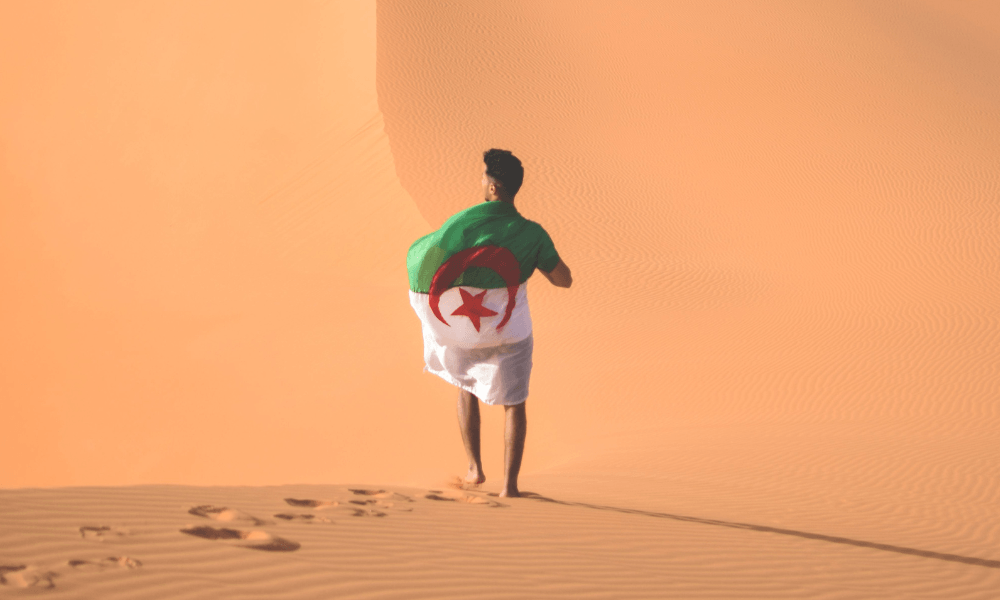
Algeria is home to the largest portion of the Sahara Desert of any nation on earth, and the physical traditions of its Tuareg and Amazigh desert communities represent one of humanity's most ancient and tested endurance cultures. Long-distance travel across the Sahara on foot and by camel, the physical demands of nomadic life in an environment of extreme heat, aridity and resource scarcity and the extraordinary navigation and survival skills required to cross the world's harshest terrain have shaped a physical culture of genuine endurance depth across millennia.
The Marathon des Sables, a 250-kilometre ultramarathon across the Moroccan and Algerian Sahara widely regarded as the world's toughest footrace, draws on the endurance traditions of North African desert culture and attracts thousands of participants annually who submit themselves to the extreme heat, sand terrain and multi-day sustained effort that Saharan communities have navigated throughout their history. Research on Marathon des Sables participants found that successful completers demonstrated heat adaptation responses, fat oxidation efficiency and psychological resilience comparable to the most extreme endurance athletic populations ever studied, confirming that Saharan desert endurance training is a physiological stimulus of extraordinary potency.
Algeria's desert endurance heritage produces athletes whose cardiovascular systems are adapted to sustained effort under conditions of extreme thermal stress, producing the plasma volume expansion, thermoregulatory efficiency and psychological tolerance of discomfort that define elite endurance performance in any environment.

Algerian Distance Running: Mediterranean Speed Meets Saharan Endurance
Algeria has produced some of the world's greatest middle and long-distance runners, most famously Noureddine Morceli, who held world records across multiple distances in the 1990s and whose career reflects a distance running heritage built on the combination of Mediterranean coastal training environments and Saharan endurance traditions. This combination creates a uniquely powerful physiological foundation for sustained aerobic performance that Algeria's athletics history has validated across multiple generations of world-class talent.
Research on North African distance running success identified the combination of moderate altitude training in Algeria's Atlas Mountain regions, the heat adaptation benefits of Saharan climate exposure and the cardiovascular efficiency developed through sustained endurance training from early in athletic careers as the primary physiological contributors to the sustained production of world-class distance talent. Algeria's geographical positioning between the Atlas Mountains and the Sahara creates, in effect, a naturally occurring live-high, train-in-varied-conditions environment that sports scientists deliberately engineer at considerable expense in purpose-built altitude training centres. Algeria's athletes access these benefits as a natural consequence of where they live and train.

Algerian Combat Sport Heritage: Wrestling and Boxing Traditions
Algeria has a rich tradition of combat sport that includes competitive wrestling rooted in indigenous Kabyle and Amazigh athletic traditions, as well as a boxing programme that has produced Olympic medallists and African champions across multiple weight categories. These combat sport traditions develop the grip strength, explosive hip power, anaerobic endurance and competitive psychological resilience that exercise science identifies as foundational to all-round athletic capability, complementing the endurance heritage of Algeria's desert and distance running culture with the power and explosive capacity that contact sport conditioning produces.
The combination of elite endurance capacity and combat sport-derived power and explosiveness that Algeria's dual athletic heritage produces is, in exercise science terms, an excellent approximation of the complete athletic profile: the ability to sustain effort across extended periods while also generating explosive force when the moment demands it. This combination underpins Algeria's consistent competitive performance in African football at both club and international level, producing players who can work for 90 minutes and still produce decisive physical moments late in matches when less well-conditioned opponents are fading.
Algerian Football: Passion, Pace and the 2019 AFCON
Algeria's 2019 Africa Cup of Nations triumph, achieved with a squad combining European-based technical quality with the physical intensity and collective passion of a nation united behind its team, represents the high point of a footballing tradition that has consistently produced competitive, technically refined and physically capable national teams. The Fennec Foxes' playing style combines the endurance heritage of North African distance culture with the explosive pace that the combination of Saharan heat adaptation and combat sport power conditioning produces, creating a physical profile well-suited to the sustained high-intensity demands of modern international football.
Research on physical performance profiles in elite African football found that North African nations consistently produced players with superior aerobic capacity and high-intensity distance covered per match compared to sub-Saharan African opponents of equivalent technical rating, reflecting the endurance heritage that the Mediterranean and Saharan training environments collectively develop. Algeria's players arrive at the 2026 World Cup as a physically prepared, tactically sophisticated unit built on one of Africa's most enduring athletic traditions.

Mint Tea and Recovery: North African Wellness Traditions
Algeria's tea culture, centred on the preparation and sharing of heavily sweetened mint tea in a ritual of hospitality and social connection, provides a recovery nutrition moment that combines the cognitive benefits of caffeine with the anti-inflammatory properties of fresh mint and the rapid glucose replenishment of the traditional sugar content. Research on post-exercise carbohydrate and caffeine co-ingestion found that the combination produced superior glycogen resynthesis and next-session performance readiness compared to carbohydrate alone, suggesting that Algeria's traditional tea ritual has genuine recovery nutrition value beneath its cultural significance.
The social dimension of tea sharing additionally activates the parasympathetic nervous system through the relaxation of genuine social connection, complementing the nutritional recovery benefits with the psychological recovery that communal rest provides. Algeria's tea tradition is, in recovery science terms, a multi-modal intervention that addresses nutritional, neurological and social recovery simultaneously, integrated into daily life so seamlessly that its practitioners have never needed to call it a recovery protocol.

The Atlas Mountains: Altitude and Endurance Infrastructure
Algeria's Tell Atlas and Saharan Atlas mountain ranges, stretching across the northern part of the country at elevations between 1,000 and 2,300 metres, provide a natural altitude training environment that Algerian distance runners have exploited for generations. The established science of altitude training is well-documented throughout this series: reduced oxygen availability stimulates increased red blood cell production, greater mitochondrial density and improved oxygen utilisation efficiency that produces meaningful performance advantages at sea level when athletes return from altitude camps.
Algeria's distance running tradition is built on this geographical advantage, with athletes from highland regions developing the cardiovascular adaptations of altitude living across entire athletic careers rather than during deliberately scheduled training camps. The Atlas altitude advantage is not a protocol for Algerian athletes. It is simply the environment in which they grew up and trained, producing physiological gifts that other nations must carefully engineer to approximate.
What to Wear for Algerian-Inspired Training
Saharan endurance training, distance running and combat sport conditioning all demand activewear that manages heat aggressively in desert-intensity conditions, provides compression for sustained endurance effort and maintains support through the explosive power demands of wrestling and boxing-inspired training.
V3 Apparel's 7/8 seamless leggings are ideal for distance running and endurance training inspired by Algeria's athletic heritage, providing breathable compression and four-way stretch that manages moisture across sustained aerobic effort in warm conditions. For combat sport-inspired power training and high-intensity conditioning sessions, V3's high-impact sports bras deliver the robust support that explosive effort demands across every movement pattern.
Everything Given, Nothing Held Back
Algeria closes this series of nations the way the Fennec Foxes approach every match: with complete commitment, the endurance to sustain effort to the final moment and the cultural pride that transforms physical effort into something that transcends the athletic and becomes the deeply human. From the Sahara's extreme endurance demands to the Atlas Mountains' altitude gifts, from the combat sport tradition's explosive power to the distance running heritage's aerobic excellence, Algeria's fitness culture is built on the total expression of human physical potential across every dimension that matters.
Whether you are building Saharan-inspired heat endurance through warm-weather training, developing the explosive combat sport power that complements your aerobic base or simply connecting your fitness to the deep cultural roots that Algeria's athletic tradition represents, the Fennec Foxes offer a framework for physical development that is as ancient as the Sahara and as relevant as the next session on your training plan.
Explore V3 Apparel's full leggings collection and find the pieces that support every session of your own fitness journey.