

How to train for your first Hyrox race as a woman
Hyrox has exploded in popularity across the UK, with women making up nearly half of all participants in this demanding fitness racing format. This hybrid race combines running with functional fitness stations, creating a unique challenge that tests both cardiovascular endurance and strength. Training for your first Hyrox race as a woman requires a strategic approach that builds the specific fitness demands whilst working with your physiology and recovery needs.
The beauty of Hyrox lies in its accessibility. You don't need to be an elite athlete to participate, but proper preparation is essential. The race format remains consistent: eight 1km runs interspersed with eight functional fitness stations including ski erg, sled push, sled pull, burpee broad jumps, rowing, farmers carry, sandbag lunges and wall balls. Understanding how to train effectively for this combination will determine your race day experience.
Understanding Hyrox race demands for women

Women face specific considerations when training for Hyrox. Research shows women typically have better fatigue resistance in endurance activities but may need more focused strength development for the functional stations. The key is developing a training programme that addresses both components without creating excessive fatigue.
The total race distance covers 8km of running plus the time spent on functional stations. Most first-time female participants complete Hyrox in 90 to 120 minutes, with elite women finishing closer to 70 minutes. Your training should prepare you for sustained effort across this timeframe.
Women generally recover more quickly between training sessions due to hormonal differences, allowing for more frequent moderate-intensity sessions. However, the menstrual cycle can impact performance and recovery, making periodisation crucial in your training plan.
Building your cardiovascular base
Running forms the backbone of Hyrox, so developing aerobic capacity is non-negotiable. Start with building a solid base of easy-paced running, aiming for 70-80% of your running volume at conversational pace. This develops mitochondrial density and capillarisation, crucial for sustained performance.
Incorporate tempo runs once weekly, running at a comfortably hard pace you could maintain for 45-60 minutes. These sessions improve lactate threshold, helping you maintain pace throughout the race. Track sessions targeting VO2 max once weekly will develop your top-end speed and running economy.
Practice running on tired legs by scheduling runs immediately after strength sessions. This mimics race conditions where you'll transition from functional stations back to running repeatedly. Start with short runs and gradually increase duration as your body adapts.
Sample weekly running structure
- Long run: 60-90 minutes easy pace
- Tempo run: 20-40 minutes at threshold pace
- Track session: 4-8 x 800m at 5k pace
- Easy runs: 30-45 minutes recovery pace
- Brick sessions: Run immediately after gym work
Developing functional strength

The eight functional stations demand specific strength and power development. Women often need additional focus on upper body strength for stations like sled push and farmers carry. Progressive overload in these movements is essential.
Ski erg and rowing require powerful pulling mechanics. Develop lat strength through pull-ups, bent-over rows and lat pulldowns. Focus on maintaining rhythm and power output over extended periods rather than short bursts.
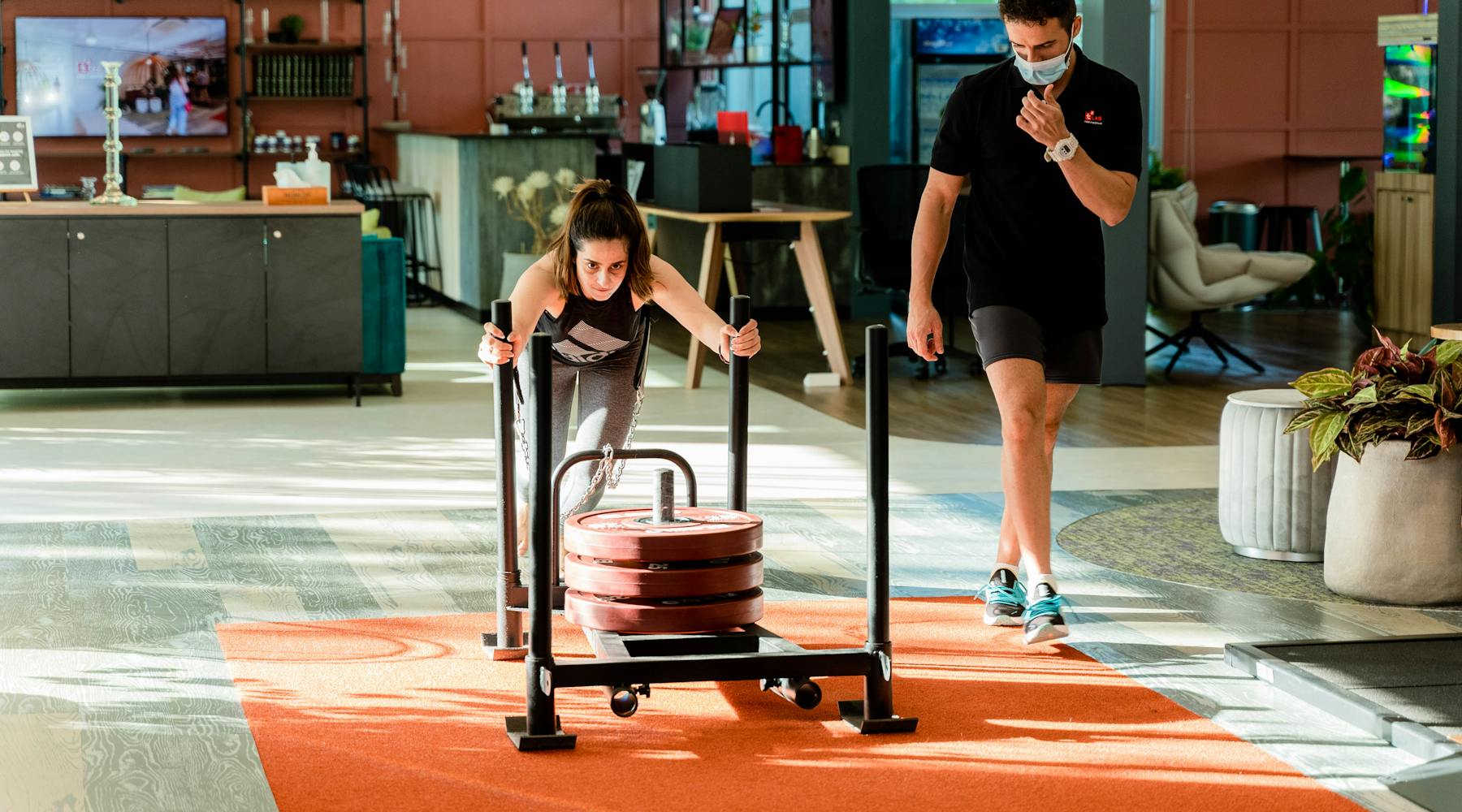
Sled push and pull challenge posterior chain strength and anaerobic power. Practice these movements weekly, gradually increasing weight and distance. Romanian deadlifts, hip thrusts and Bulgarian split squats build the required strength patterns.
Farmers carry tests grip strength and core stability under load. Use farmer's walks, dead hangs and loaded carries in your training. Progress weight gradually whilst maintaining perfect posture.
Wall balls demand lower body power and shoulder endurance. Goblet squats, thrusters and medicine ball work prepare you for this station. Practice maintaining consistent rhythm as fatigue sets in.
Periodising your training programme
A 12-16 week training block provides adequate preparation for most women. Divide this into distinct phases: base building, strength development, race-specific preparation and taper.
READY TO TRAIN IN STYLE?
Explore V3 Apparel's HYROX functional fitness activewear, designed for serious athletes and built to perform.
SHOP NOWBase phase (4-6 weeks) establishes aerobic fitness and movement competency. Focus on easy running volume and learning proper form for all functional movements. Gradually increase training load whilst monitoring recovery.
Strength phase (4-5 weeks) emphasises progressive overload in functional movements. Increase weights and complexity whilst maintaining running volume. This phase builds the strength foundation required for race day performance.
Race-specific phase (3-4 weeks) combines running and functional work in race-like formats. Practice transitions between stations and running segments. Reduce overall volume but maintain intensity.
Taper phase (1-2 weeks) reduces training load whilst maintaining sharpness. Focus on mobility, light technical work and mental preparation. Trust your fitness and avoid last-minute changes.
Training frequency and recovery
Most women respond well to 5-6 training sessions per week when preparing for Hyrox. This allows adequate stimulus without excessive fatigue accumulation. Structure your week around key sessions with easier days facilitating recovery.
Schedule your hardest running and strength sessions with at least one easy day between them. Consider your menstrual cycle when planning high-intensity work, as performance can fluctuate throughout your cycle.
Prioritise sleep quality and aim for 7-9 hours nightly. Poor sleep significantly impacts both performance and recovery, particularly for women. Create consistent sleep routines and optimise your sleep environment.
Nutrition timing supports training adaptations and recovery. Consume adequate protein (1.6-2.2g per kg body weight) and don't fear carbohydrates around training sessions. They fuel performance and support recovery.
Race day strategy and pacing
Develop your race strategy during training, not on race day. Practice pacing for each running segment and functional station. Start conservatively and build into the race rather than going out too aggressively.
Plan your transitions between stations. Quick, efficient changeovers save valuable time and energy. Practice moving from running into functional work and back to running repeatedly during training.
Fuel strategically throughout the race. Most women benefit from 30-60g carbohydrates per hour during events lasting longer than 90 minutes. Practice your fuelling strategy during long training sessions.
Mental preparation is crucial for success. Visualise race scenarios and develop coping strategies for difficult moments. The mental challenge often exceeds the physical demands, particularly in your first race.
Frequently Asked Questions
How long do I need to train for my first Hyrox race as a woman
Most women need 12-16 weeks of structured training to adequately prepare for their first Hyrox race. This timeframe allows proper base building, strength development and race-specific preparation. If you already have good fitness levels, 10-12 weeks may suffice.
What equipment do I need to train for Hyrox at home
Essential equipment includes a sandbag or weighted backpack, kettlebells or dumbbells, and access to running routes. Optional additions include a ski erg or rowing machine, resistance bands and a medicine ball. Many movements can be adapted using household items initially.
Should I focus more on running or strength training for Hyrox
Both components are equally important, but most women benefit from a 60:40 split favouring running volume. However, if you're already a strong runner, increase strength work proportionally. The key is developing both aerobic capacity and functional strength simultaneously.
How do I know if I'm ready for my first Hyrox race
You should comfortably run 8km continuously, complete all functional movements with proper form, and have practiced race simulations successfully. Most importantly, you should feel confident managing the time demands and physical challenges of a 90-120 minute race.
What should I eat before and during a Hyrox race
Eat a familiar, carbohydrate-rich meal 3-4 hours before racing. During the race, consume 30-60g carbohydrates per hour through sports drinks, gels or easily digestible foods. Practice your fuelling strategy during training to avoid race day issues.
How often should I practice the actual Hyrox stations
Practice each station 2-3 times per week initially to develop technique, then reduce to 1-2 times weekly once form is established. Focus on maintaining quality movement patterns as fatigue increases, as this mirrors race conditions most accurately.
Can I do Hyrox if I've never done functional fitness before
Absolutely, but allow extra time for movement learning and strength development. Start with bodyweight versions of each movement before adding load. Consider working with a qualified trainer initially to establish proper form and prevent injury.
Related: Shop HYROX functional fitness, squat-proof leggings, matching two-piece workout sets, and gym shorts for your training plan.
Photos provided by Pexels.
Please note: The content on The Playbook is for general information and education only and is not medical advice. V3 Apparel are not doctors, physiotherapists or registered nutritionists. Always speak to a qualified healthcare professional before changing your diet, exercise routine or lifestyle, especially if you have a health condition or injury, or are pregnant or postnatal. You exercise at your own risk: stop straight away if you feel pain, dizziness or discomfort. Results vary from person to person and aren't guaranteed. As far as the law allows, V3 Apparel accepts no liability for any injury, loss or damage arising from the use of this content. We're not responsible for the content of third-party websites we link to. Some links may be affiliate links, which means V3 Apparel may earn a commission on purchases made through them, at no extra cost to you.